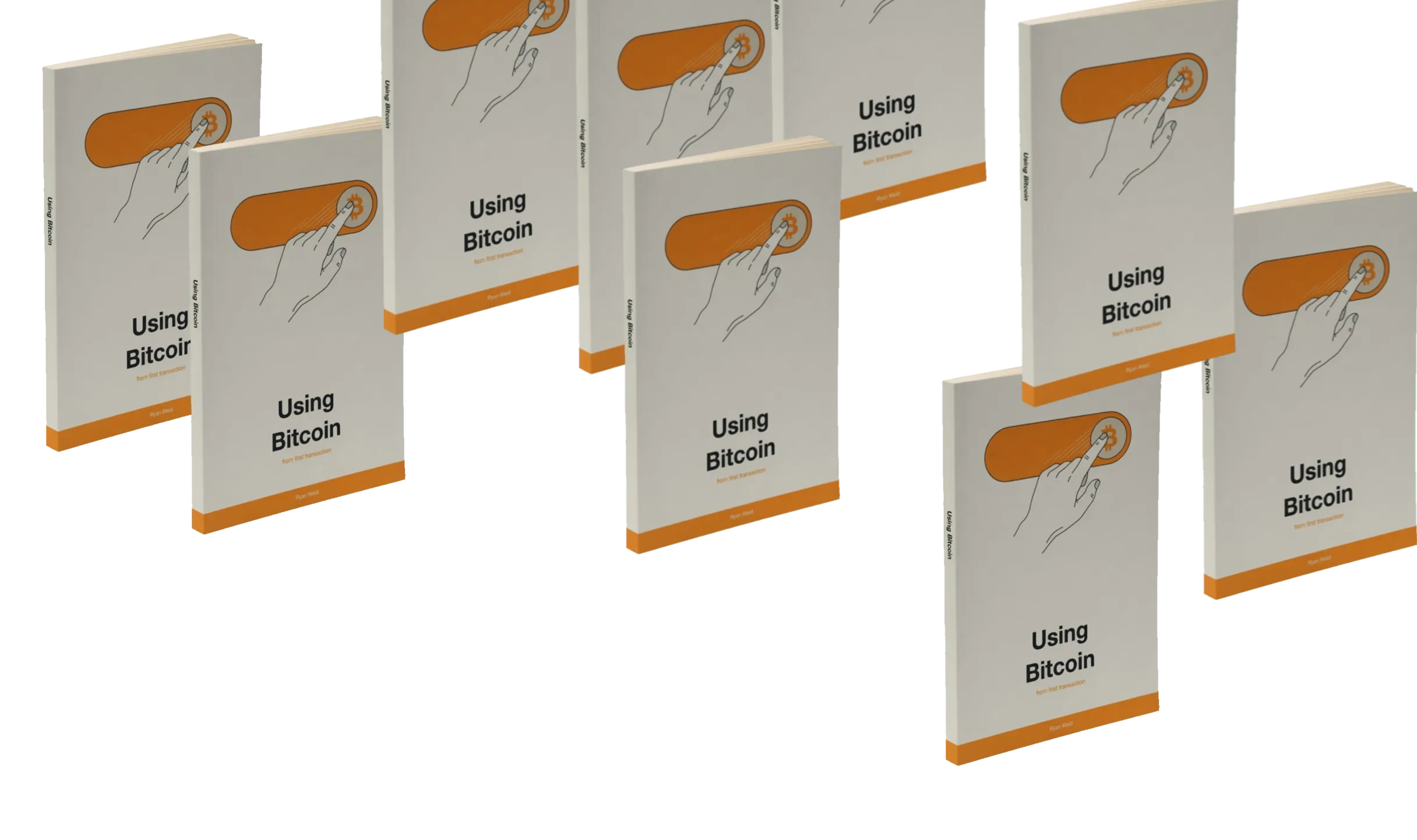
Read the web edition, free or buy the paperback, $40
Learn bitcoin by using bitcoin.
Not by reading about it. Not by arguing about it. By doing it: one wallet, one backup, one small payment, in an afternoon. This short, illustrated book walks you to your first transaction and stops there, on purpose.
The path, in four steps
-
Set up a wallet you can understand
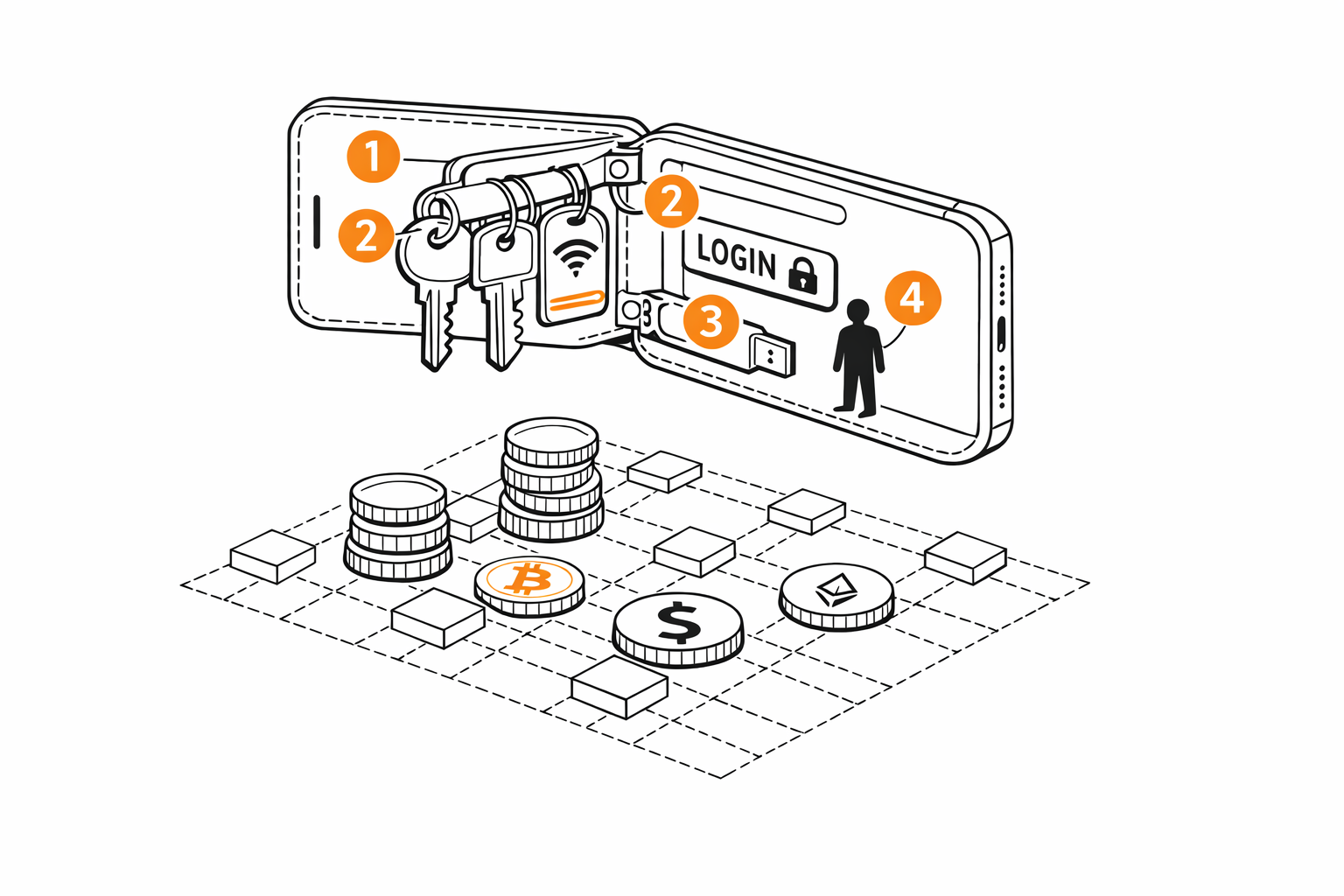
A wallet holds keys, not coins. Once that clicks, the rest is easy.
-
Write down the seed phrase, on paper
Twelve words that restore everything. Then prove it by restoring.
-
Receive a small amount
Watch value arrive at an address only you control. Five dollars is plenty.
-
Send a small test payment
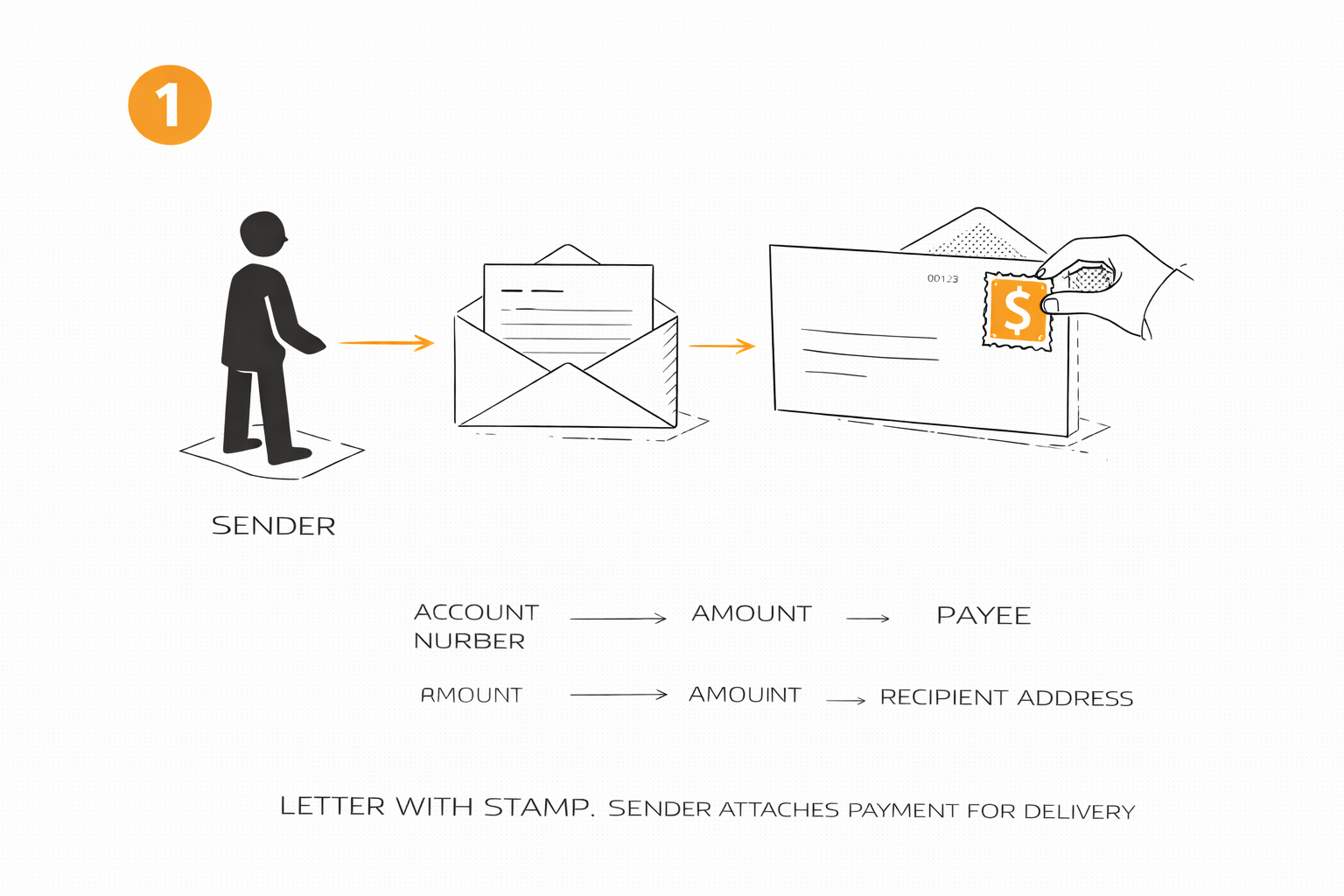
Sign a message, attach the postage, wait for the confirmation. That is the whole trick.
Draft edition, updated 2026-10-12. It is still moving; the web edition moves with it.
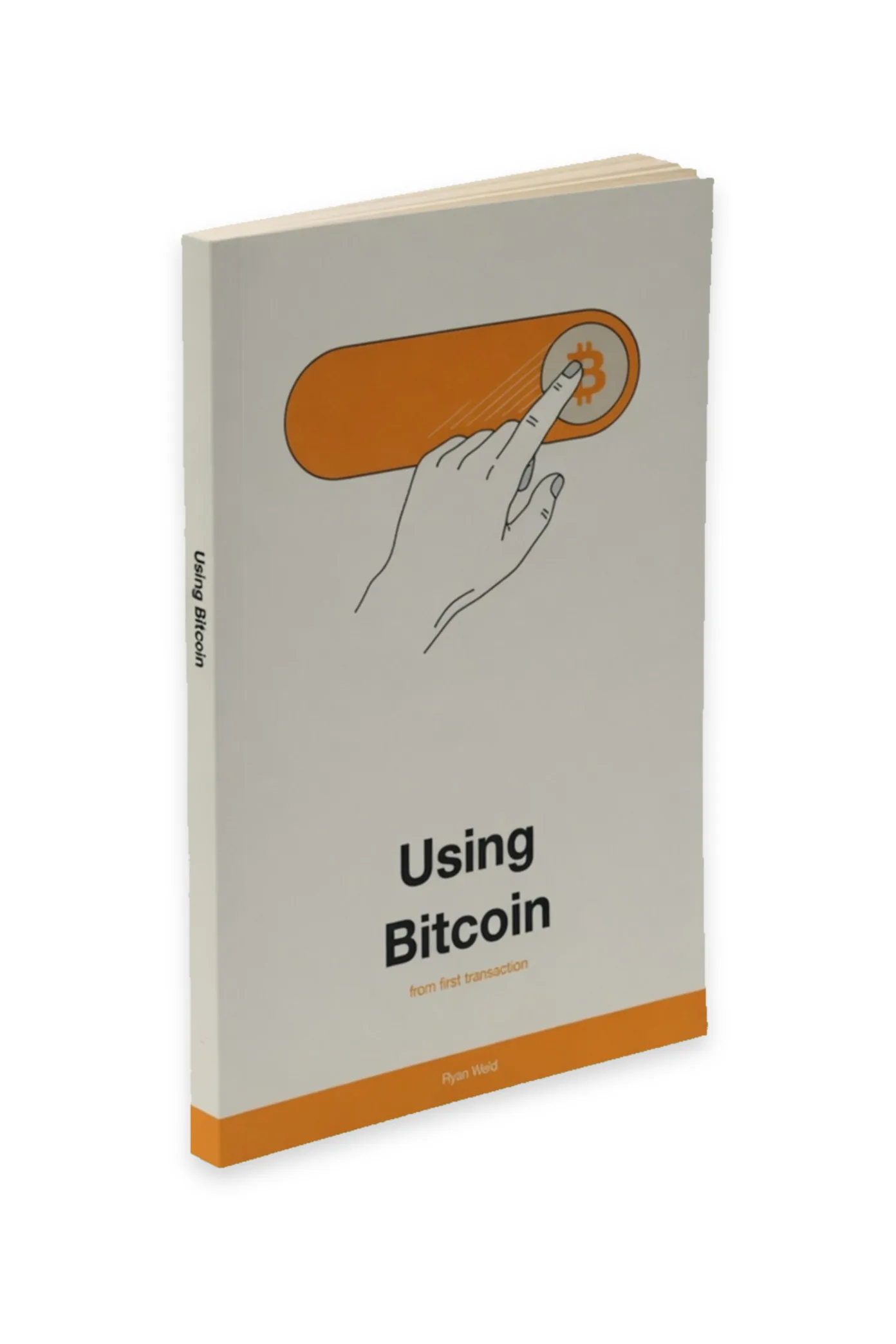
From the first page to the first send
Short chapters, big pictures, one job each. Maya, Jon and Rosa set up wallets, back them up, and pay each other, so you can see each step before you take it. Every chapter ends with a pointer to a LiveWallet notebook where you do the same thing for real.
What you will be able to say
- I know what problem bitcoin is trying to solve.
- I know that a wallet holds keys, not coins.
- I know why the seed phrase matters.
- I know how a first transaction feels.
- I have sent one, with a memo attached.
- I know enough to keep learning without pretending I know everything.
-
Chapter 1
start-here
Start Here
What this book is for, who Maya is, and the four things to remember if you remember nothing else.
-
Chapter 2
why-direct-payments
Why Direct Payments
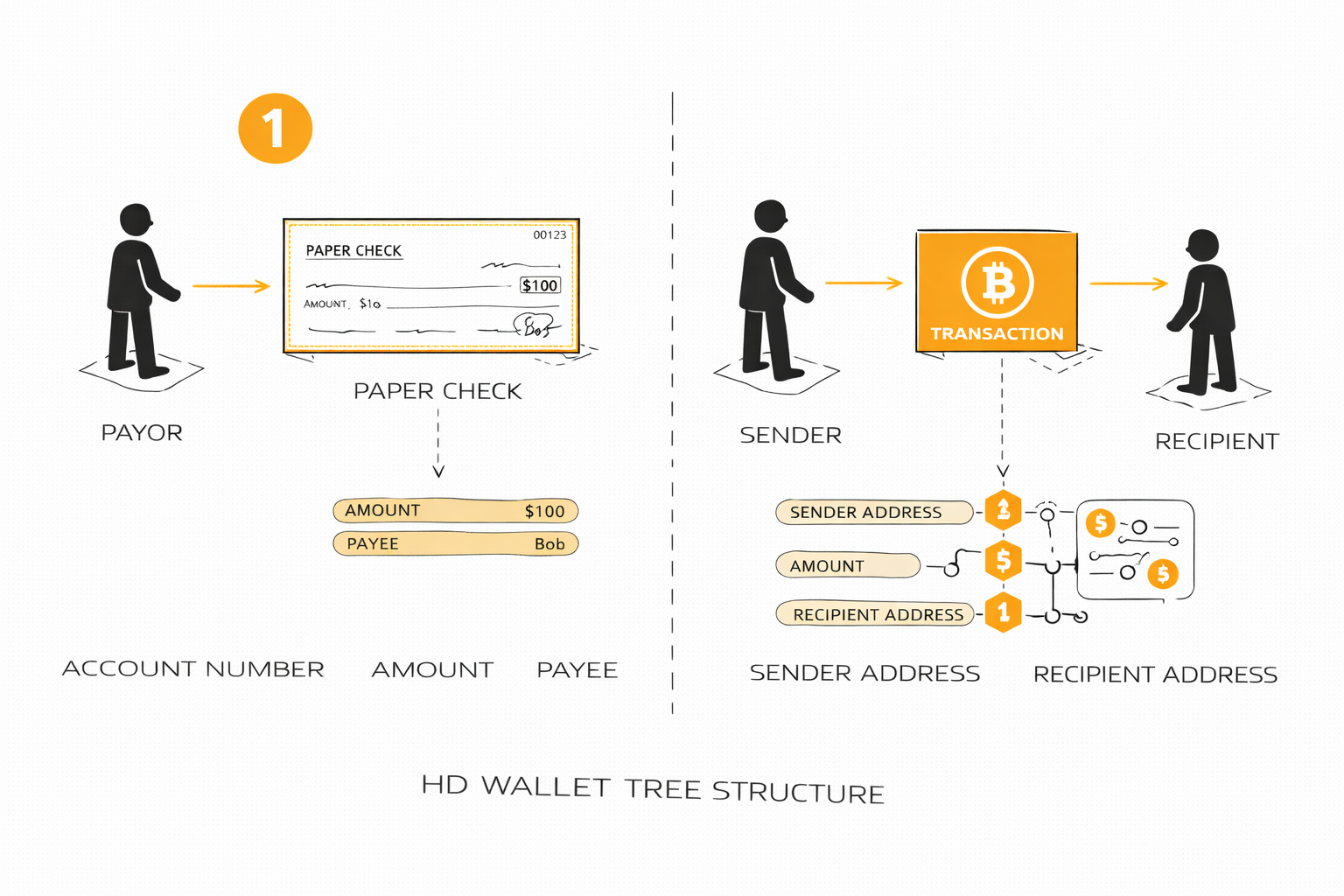
Why moving money online still needs a middleman, and what changes when it does not.
-
Chapter 3
what-bitcoin-is
What Bitcoin Is
A protocol, not a coin: sending information, a shared record anyone can check.
-
Chapter 4
wallets
Wallets
Custodial or not, what you actually see on screen, and how to get a few dollars to learn with.
-
Chapter 5
seed-and-recovery
Seed And Recovery
Why the backup looks like words, what to do the moment they appear, and the rule you must not break.
-
Chapter 6
first-transaction
First Transaction
Receiving comes first. Then sending is signing a message, the sender pays for delivery, and pending is not broken.
-
Chapter 7
network-reference
Network Reference
There are several networks with similar names. One page on telling them apart.
-
Chapter 8
after-the-first-send
After The First Send
Look it up yourself, what to do this week, and a glimpse of payments that carry meaning.
-
Chapter 9
quick-words
Quick Words
The few words worth keeping straight, in plain language.
-
Afterword
how-this-started
How This Started
One careful send, with someone willing to sit with you. How the author started.
Three numbers to carry through the book
They are on a spread of their own, right after the table of contents.
- 100,000,000
- satoshis in one bitcoin.
- Like 100 cents in a dollar, with six more zeros. A first transaction is a few thousand sats: cents, not coins.
- 21,000,000
- coins, ever.
- Released one block at a time, about every ten minutes, in amounts that halve on a fixed schedule. The last sliver lands around 2140.
- 2
- things every transaction does.
- It sends some sats to the recipient and pays some sats as a fee. The sender pays, like postage. The receiver never does.
Who it is for
Curious people who have been put off by every other bitcoin book.
- A designer, a parent, a founder, a student, a normal internet user.
- No prior crypto anything.
- Low tolerance for jargon, tribes, and hype.
- Would rather do one real thing than hold one more opinion.
Who it is not for
Anyone looking for a price target.
- Not a trading guide. No candles, no rockets, no moons.
- Not a manifesto. It does not ask you to believe anything.
- Not a developer manual. No code on the cover, or inside.
- Not the whole house. It is the front door, and it says where the next room is.
The pictures carry the load
Like a good LEGO manual: when a picture can say it, the text gets out of the way.
But what about…
The questions that stop people at the door.
- “I am not technical.”
- Good. The book has no code and no math. If you can scan a QR code and write twelve words on paper, you have every skill it needs.
- “Do I need real money?”
- A few dollars, and only when you are ready. The companion notebooks start on a test network where the coins are worth nothing. Real coins are a switch you flip later, under one dollar at a time.
- “Which bitcoin?”
- The name covers several networks. A first transaction works the same on any of them, and the book has a one-page reference for telling them apart. It does not pick a tribe for you.
- “Isn’t this all speculation?”
- You can speculate on anything. This book is about the other thing bitcoin does: let two people send value directly, over the internet, without asking a company first. You will have done it by the last chapter.
- “What if I lose my phone?”
- That is chapter five, and it is the most important one. The ledger does not live on your phone. The twelve words on paper bring everything back.
- “Why is it free to read?”
- Because the point is that you do the thing. The paperback is for the kitchen table, the friend, the shelf. Buying it keeps the drafts coming.
Your first transaction is an afternoon away
Read the first chapter now. Buy the paperback for the kitchen table. Either way, by the end you will have sent bitcoin, and you will know what you did.